
Professional
Identity
To this day, Industrial Design defines my trajectory as an aspiring designer and engineer. To me, it is not merely the creation of a product, but the perfect blend of technical logic and creative sense. I am an imaginative explorer and a systematic 'puzzle-solver', intrigued by the mechanics of how things work and how aesthetics drive user interaction. This duality allows me to tackle complex societal problems, grounded in my belief of ‘learning by doing’.
Tangibility & Making
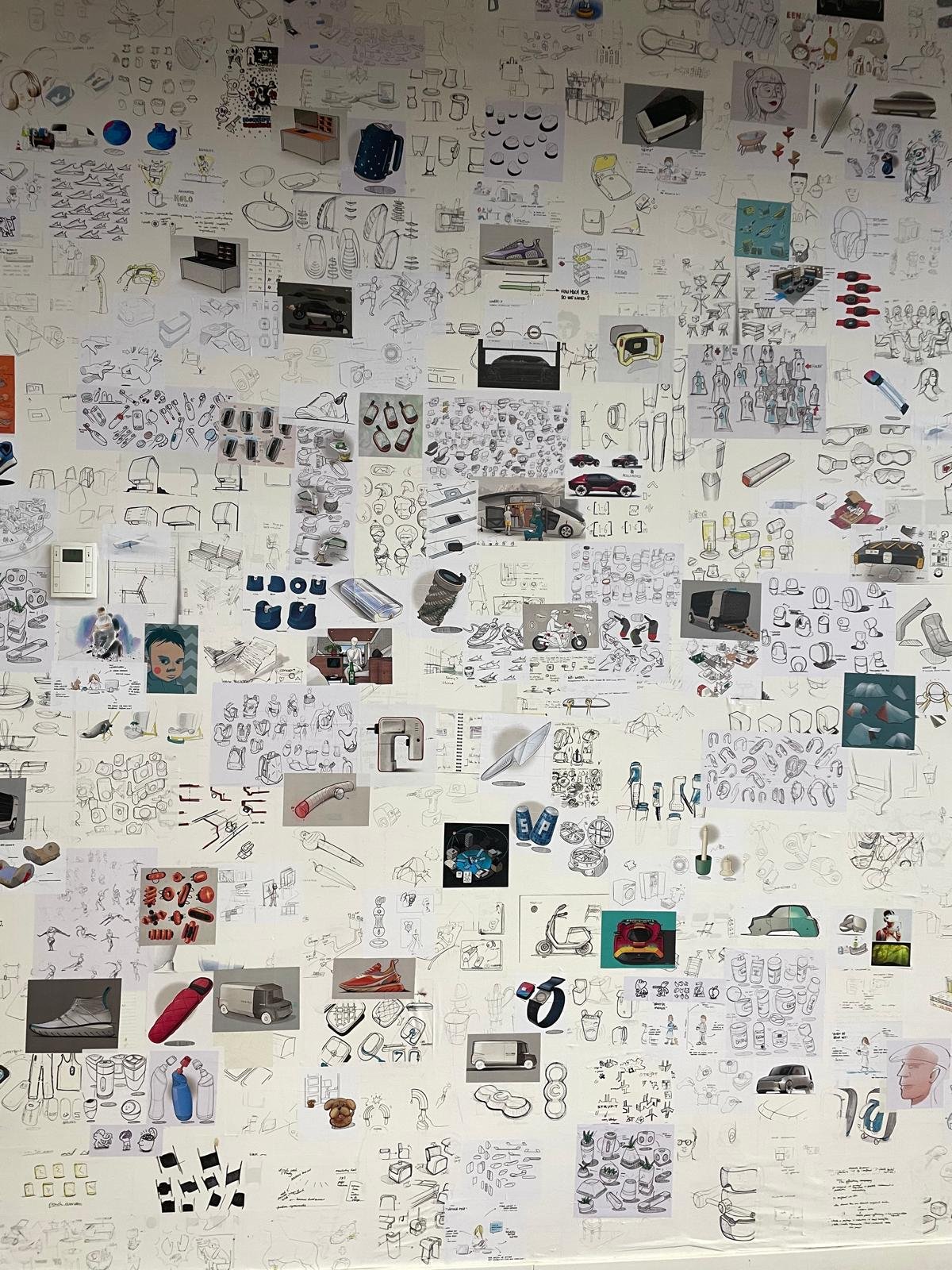
I am drawn to the tangible world: materials, textures, and objects that can be held, tested, and refined by hand, having a strong drive towards Creativity & Aesthetics. I believe an idea only truly becomes a design once it is physical. Sketches carry intention, but making something tangible is my way of moving the process forward. I am most engaged, and most myself as a designer, in the moments of modelling, cutting, prototyping, and assembling. Furthermore, I believe aesthetics form the initial layer of user interaction. Visual coherence, material selection, and form shape how people interact with a product, making beauty a fundamental component of the design itself.
Technical Rigour
My background in Mathematics and Physics shaped a belief that has stayed with me: that technical rigour and aesthetic exploration should never be separated. A design that looks resolved, but does not function is, to me, unfinished. Equally, a design that functions but has not been considered visually has failed half of its purpose. This drives my motivation to integrate Math, Data & Computing with Technology & Realization, using data and calculation not as a limitation on creativity, but as a structure that makes creativity meaningful. I look for the technical constraint first, and design around it rather than against it.
In a team environment, I am outgoing and approachable, naturally inclining towards leadership and pitching roles. I hold clear opinions and high standards for my own work, but this trait can become a weakness, sometimes clouding my judgment when listening to other perspectives. I believe, however, that good design is rarely the product of one person's perspective alone; a design only becomes resolved once explored through other people's perspectives, skills, and input. I actively work against this tendency by deliberately seeking multidisciplinary input to challenge my independent work ethic.
I recognise my strengths in the hands-on moments of a design process, where my proactivity and need to visualise and make ideas tangible push a project naturally forward. Conversely, I am weakest in the earlier phases of analysing and envisioning, where a project is still abstract and direction is unclear. Aware of this, I approach these phases methodically, relying on structured frameworks such as the RTDP, and seeking early coach, expert, and user input to clarify direction before shifting to making.