
For B3.2 I joined the New Futures squad as it closely aligned with my vision of smart homes, IoT products, and interior product design, whilst offering the technical challenge I aimed for. My learning goals revolved around my Designer-Engineer duality, particularly inclining towards T&R; exploring Design for Disassembly principles, integrating sensor data into physical products, deepening my electronics knowledge, developing a refined aesthetic style, and validating a concept that was circular and commercially grounded.
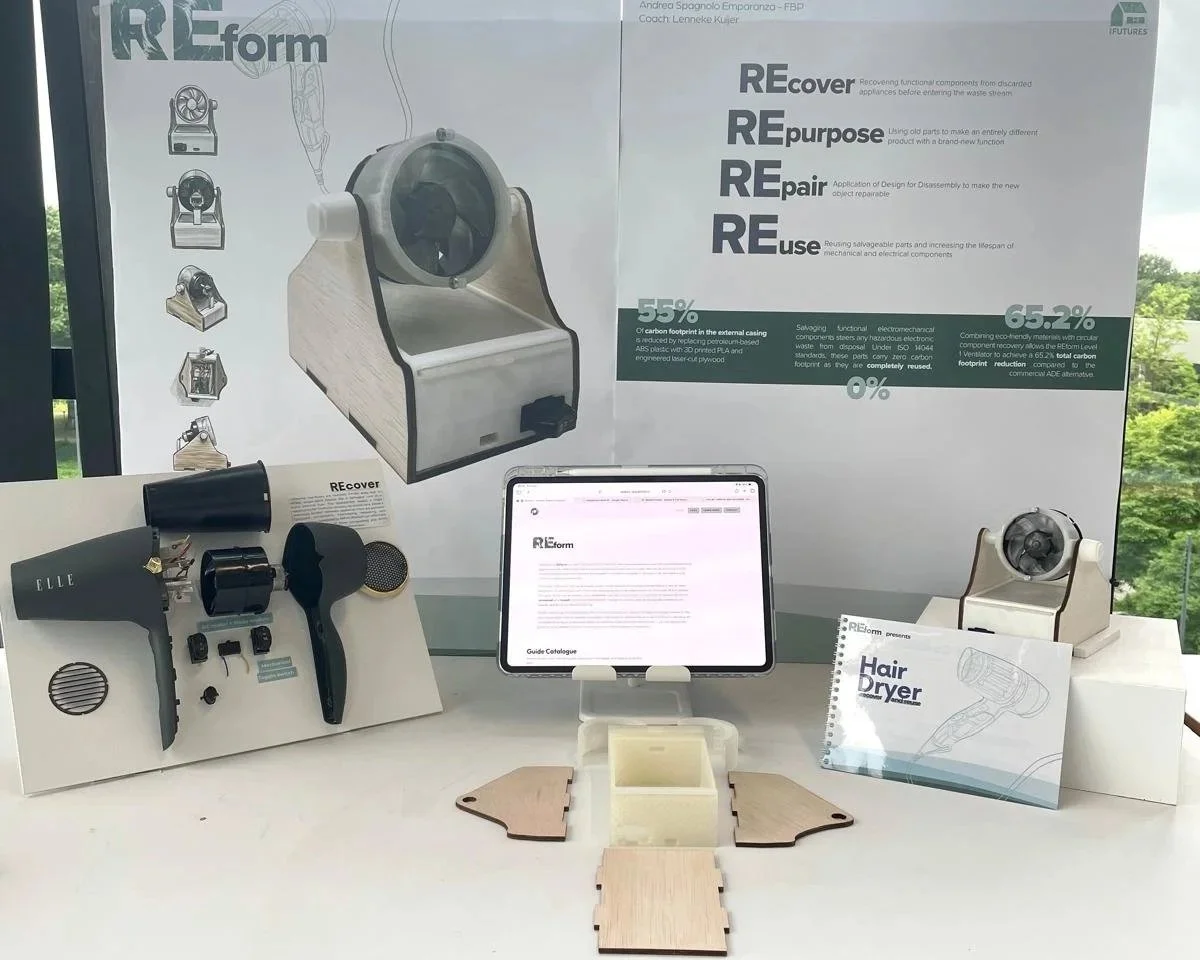
For my FBP I designed REform, an open-source circular design platform that guides users through salvaging functional components from discarded small domestic appliances and repurposing them into new household outcomes.
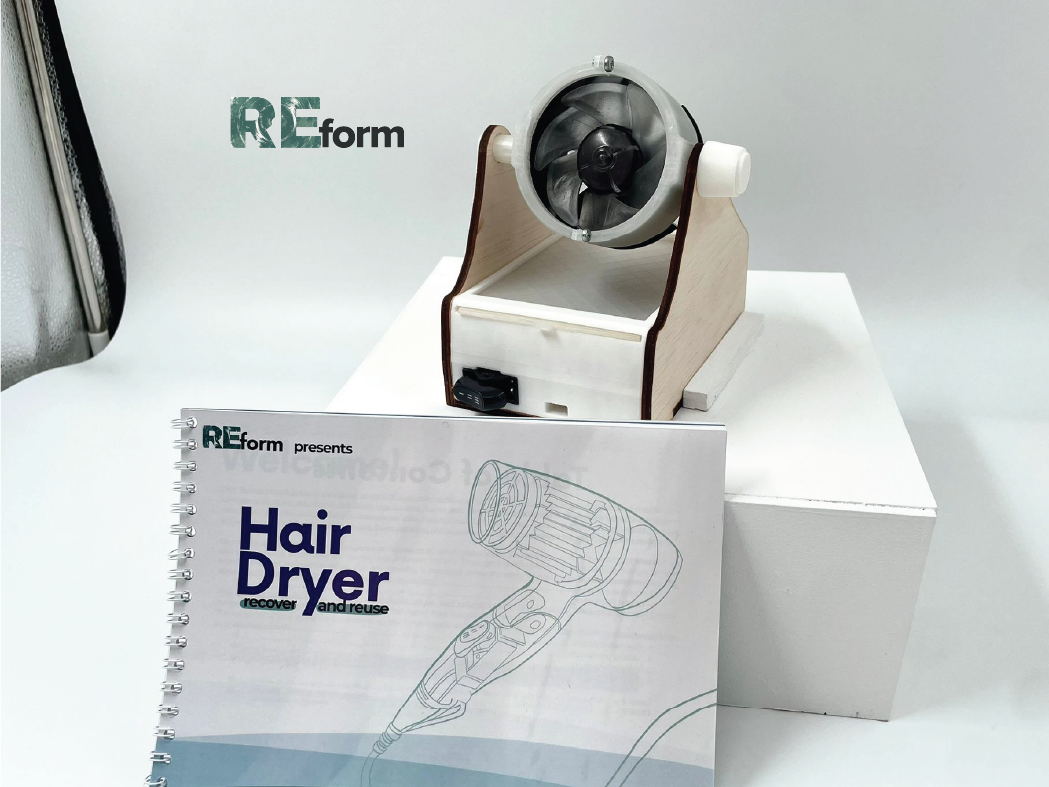
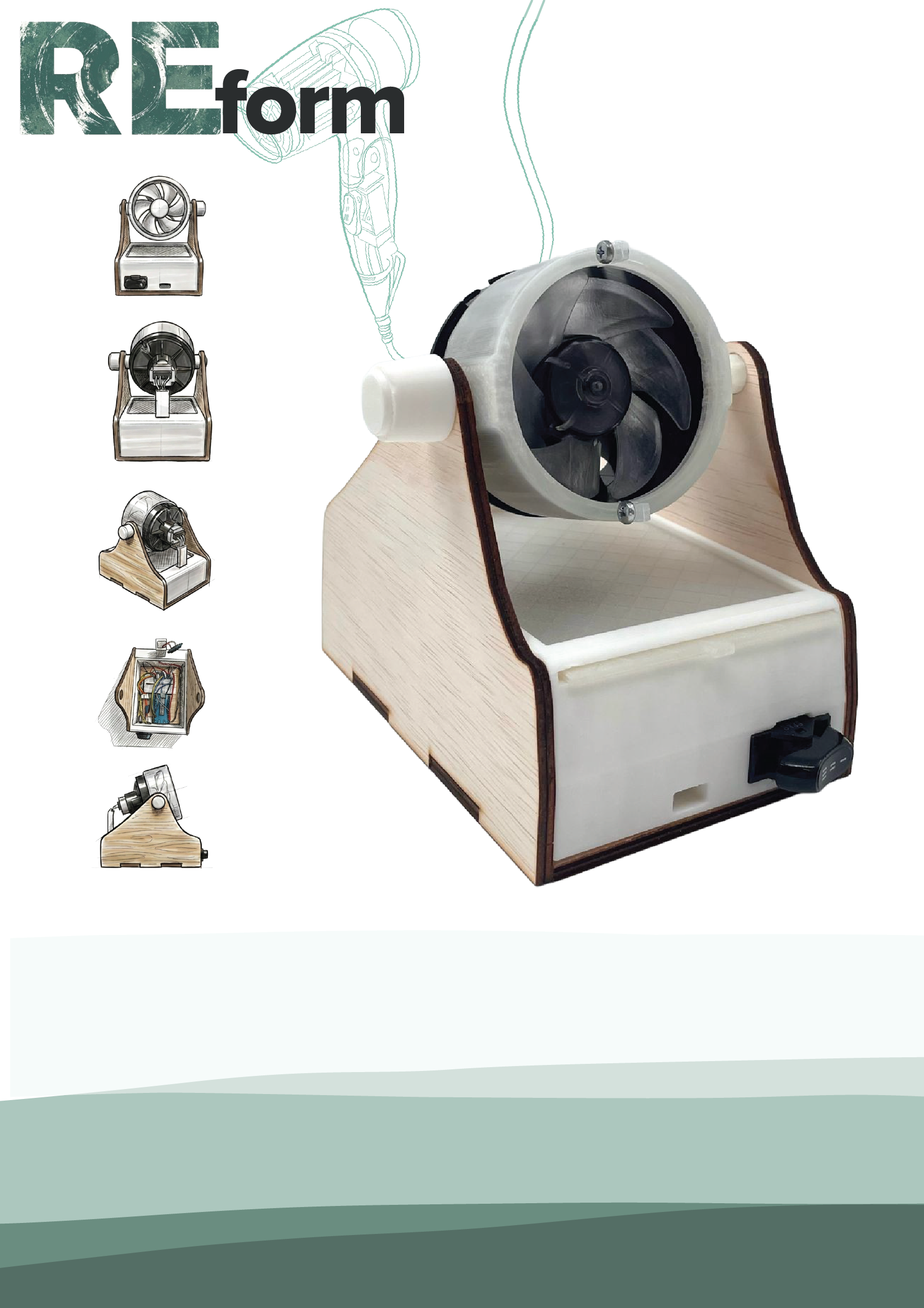
Overall, the project was an immense learning experience. Growing across all expertise areas, I can confidently portray my understanding of the importance of their interconnectedness. Although my expertise lies in C&A and T&R, the simultaneous integration of all six led REform to become a complex, coherent, and grounded proposal. REform is also the project that most directly reflects my vision of the smart, circular home, and the project where sustainability became a concrete design position I could argue and evidence, rather than a perspective I was simply aware of.
The sustainability argument began in the initial research phases. Engaging with e-waste literature, the EU WEEE Directive, and circular economy frameworks revealed that small domestic appliances are designed to fail quietly, with their casings glued shut and not designed for disassembly, their components made from mixed ABS injection-moulded plastics difficult to recycle, and their heating elements operating at voltages far beyond safe reuse parameters, making recovery impossible. Spotting how partially-functional appliances are discarded due to factors such as planned obsolescence and a fundamental lack of user understanding of what lies inside became the engine of this project; the possibility of recovering, repurposing and reusing functional mechanical components intrigued me. The EU Right to Repair Directive (2024) formalises what I believe should already be every designer's instinct: a product's end of life is a design decision made at the very beginning.
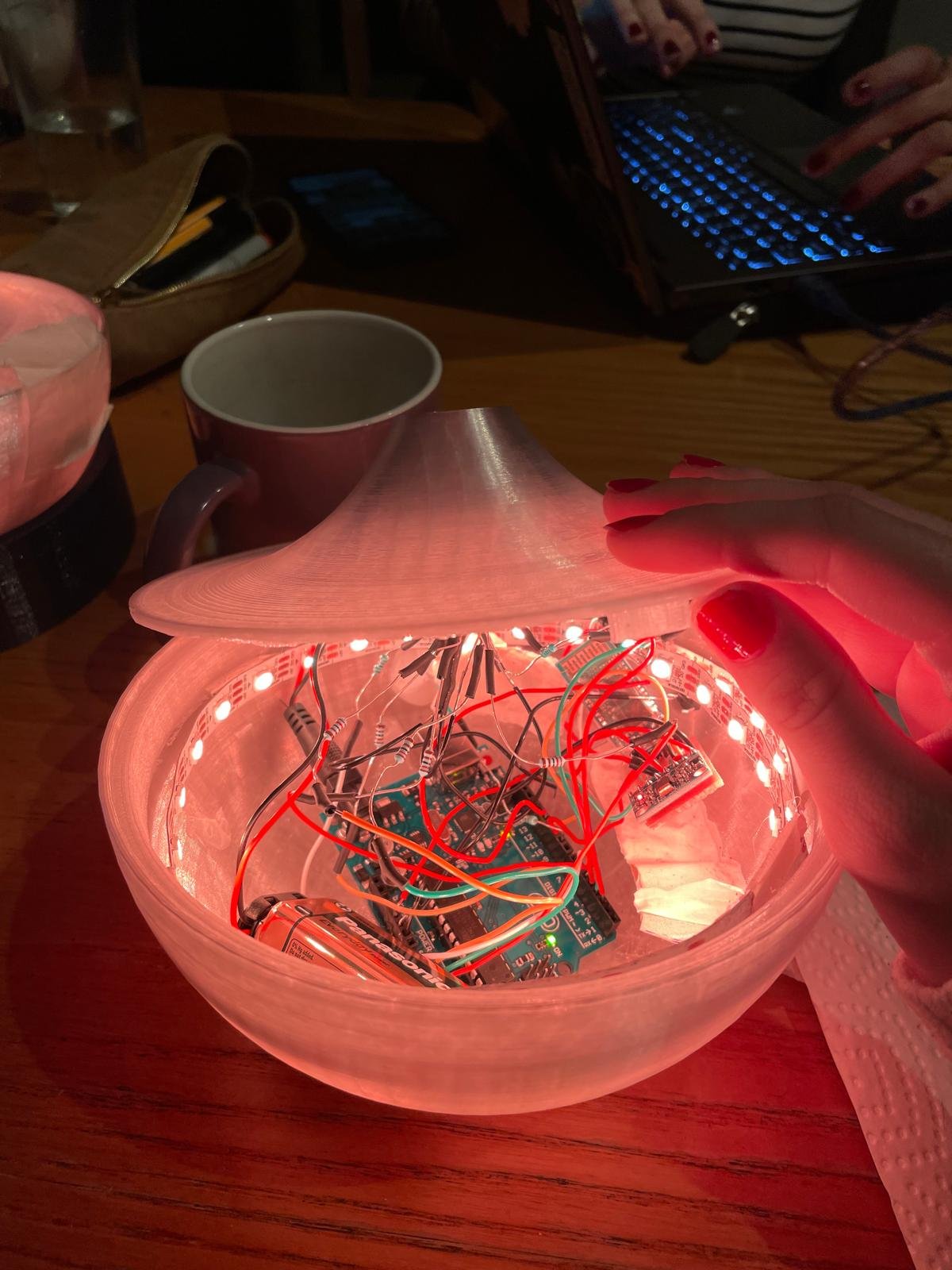
Being critical of my weaknesses in the initial phases of a design process, I quickly moved to hands-on disassembly of the hair dryer, one of the most formative moments of the project. The hair dryer disassembly was inspiring, as it surfaced an opportunity for developing in T&R whilst implementing C&A and the Sustainability background research. I approached the electronics development phase methodically: from theoretical understanding with guidance from D-search lab, to schematic drawings, to hands-on soldering components. This made my T&R learning develop exponentially whilst making my Sustainability research physically concrete, by discovering the glued casing that had to be cracked open, and the heating element operating at ~240V making it impossible to reuse, confirmed in practice exactly what the planned obsolescence literature had argued in theory.
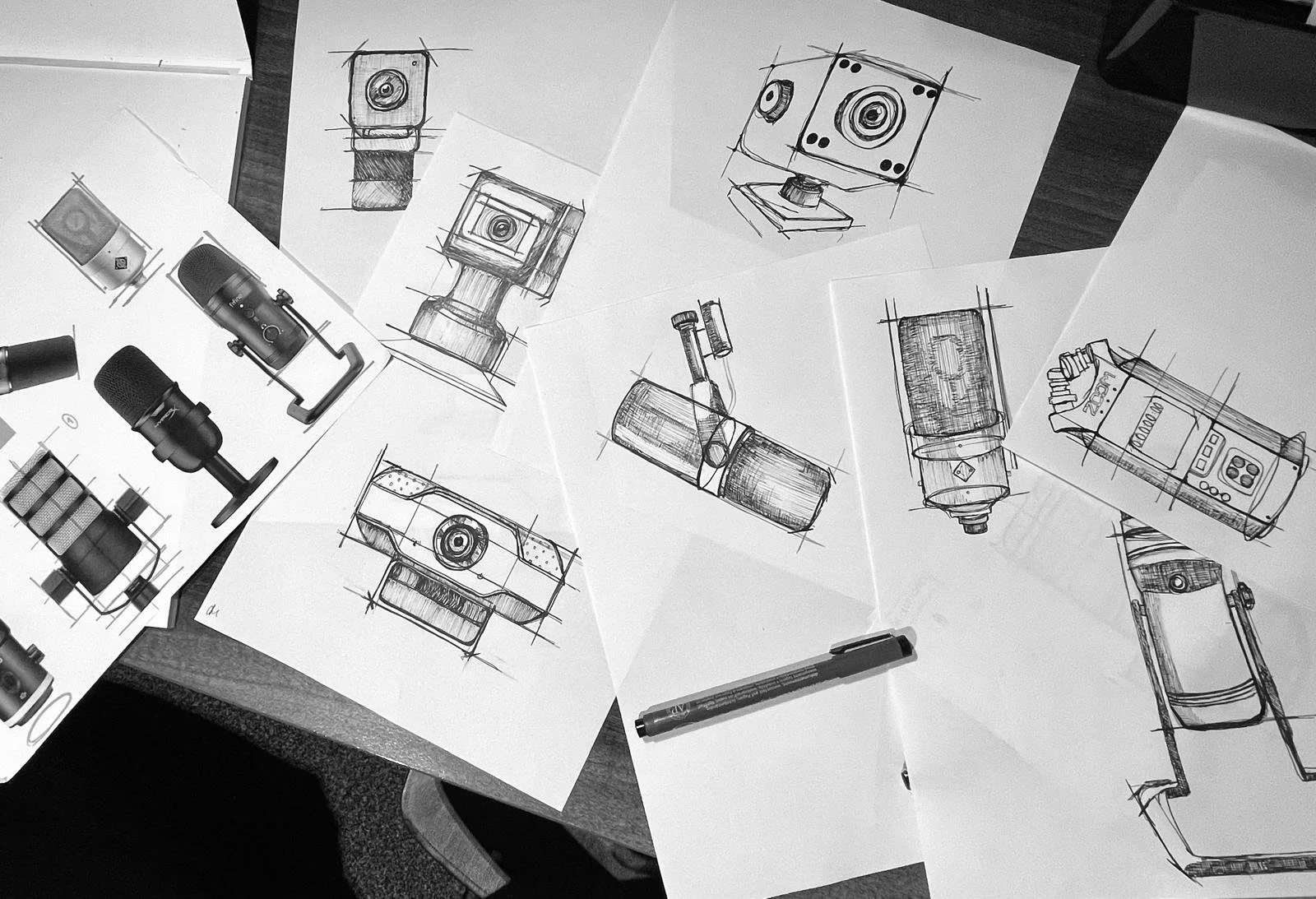
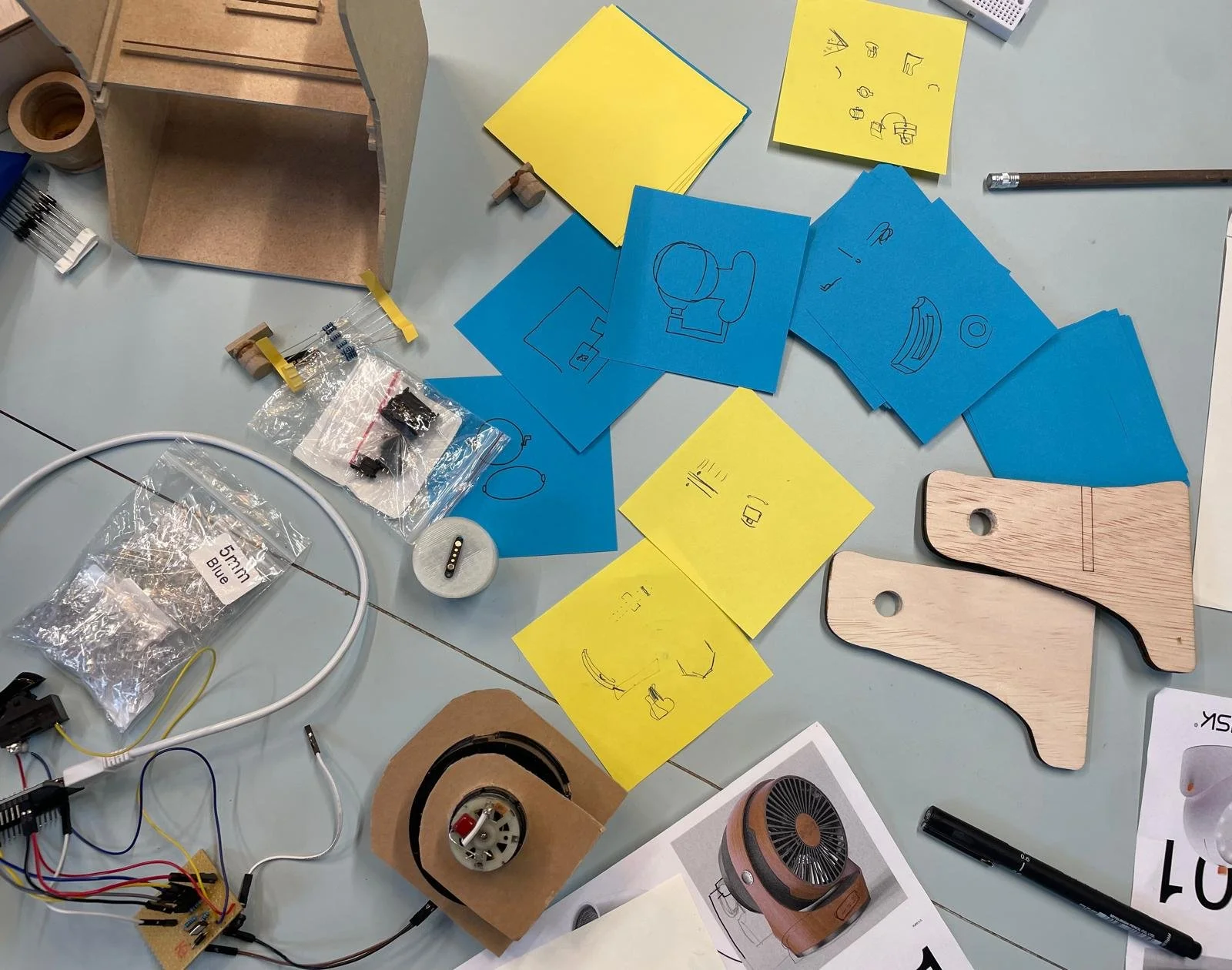
Midterm Demo Day marked the first moment of solidified expertise integration. Ideating and prototyping within C&A, designing a scenario-of-use storyboard linking to U&S, and developing a SolidWorks CAD model connecting to T&R. However, this surfaced as the most pivotal moment of the project. Feedback revealed a lacking contextual clarity I had not considered, leading me to reframe, using reflection-on-action. This redirection made me realise how much the remaining expertise areas, B&E, U&S and Sustainability, were needed to reinforce the broader argument. Without commercial grounding and a clear understanding of who this was designed for, the technical and aesthetic work lacked foundation. As for Sustainability, the feedback indicated a strong argument but a weak design proposal, highlighting a need to address and redirect my research into a more specific and backed-up proposal. From here, decisions began to flow naturally.
The co-creation session that followed directly integrated U&S. Bringing together a mechanical engineer, an electrical engineer, and an industrial designer produced more design clarity in one session than weeks of independent iteration. The mechanical engineer solved a motor rotation problem I had been struggling with; the electrical engineer clarified the breadboard layout and pinout order; the industrial designer helped unlock the aesthetic direction I had been uninspired with. Seeing how this multidisciplinary approach unlocked exactly what my project was missing reinforced how external perspectives are fundamental to good design, actively challenging my natural tendency to work independently.
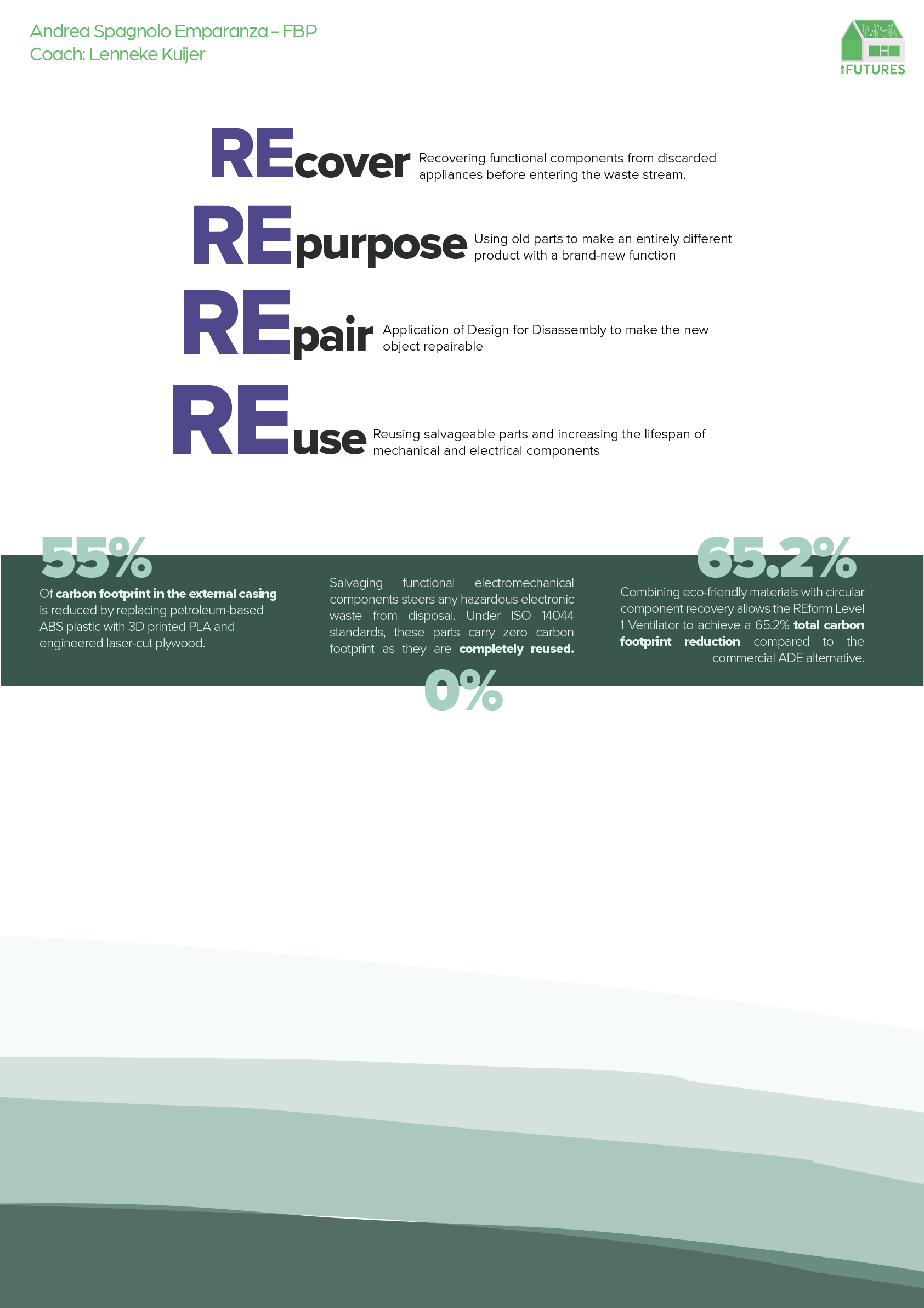
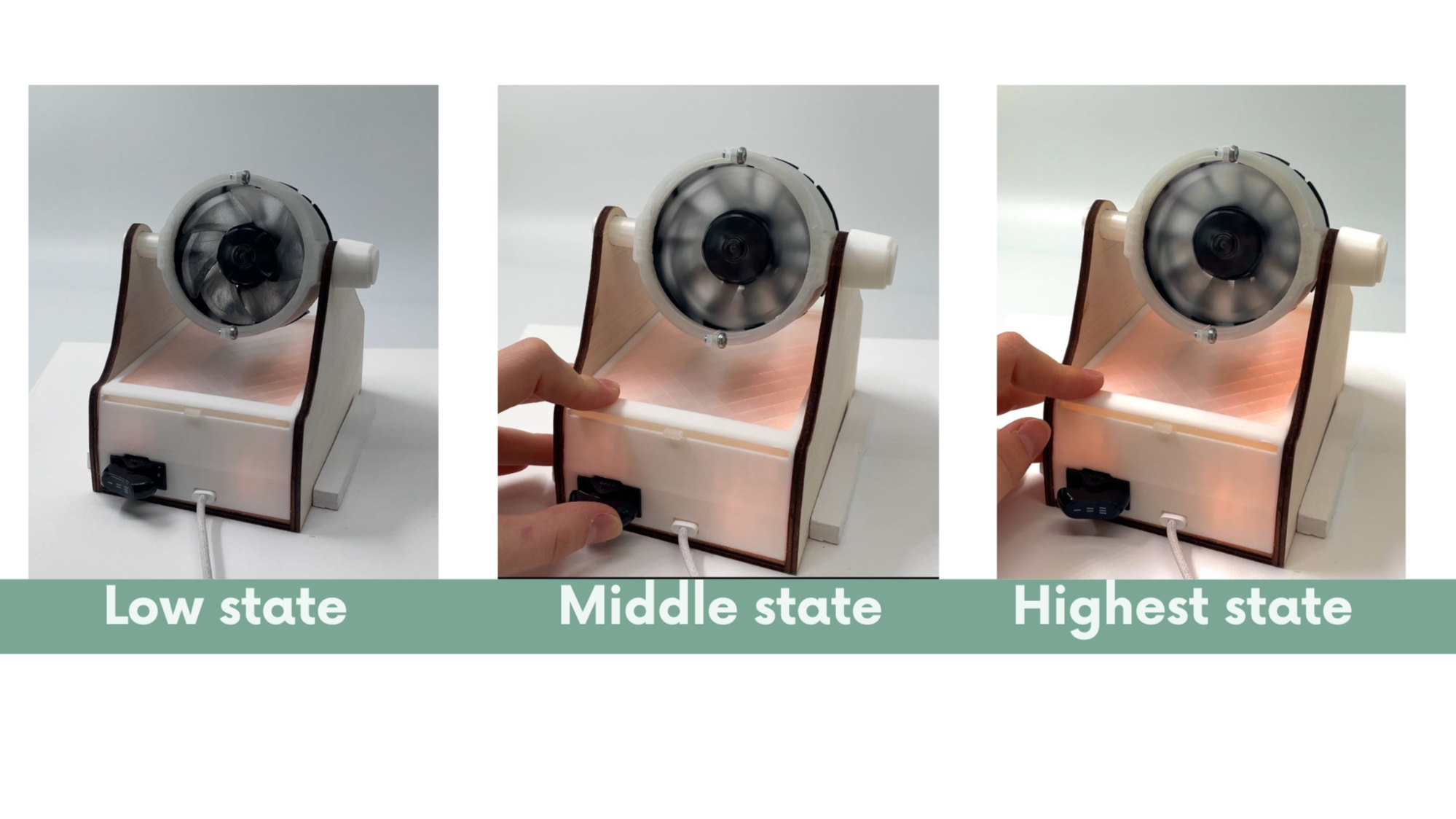
The final prototype and guide development became the most complex integration of all six expertise areas. MD&C drove dimensional calculations and tolerances, feeding into T&R through SolidWorks modelling and further electronics development, revisiting the hair dryer to salvage the mechanical toggle switch into the final circuit. C&A shaped the minimalist, polished material language. Within the sustainability expertise I used the circular design principles to guide my material and production decisions; 3D-printed PLA and laser-cut plywood replaced virgin ABS plastic, chosen for their bio-based origin and lower carbon footprint; the salvaged motor and toggle switch entered the system carrying zero-carbon debt; M3 screws, finger joints, a bi-directional lock tab, and a translucent slit exposing the internal electronics embedded Design for Disassembly as a core principle. U&S and C&A converged in the guide creation, transforming co-creation insights into clear, visually coherent IKEA-style instructions, branding, typography, and colour schemes. B&E pushed the project further, where my Sustainability research on circular economy R-strategies became the platform's founding identity. Rather than presenting REform as a technical guide, I positioned it around the R-strategies of REcover, REpair, REpurpose and REuse as a value proposition that could capture a user's attention and communicate the circular argument immediately. This is where the name REform emerged, and where Sustainability and B&E converged. Further into Sustainability, the screening LCA, calculated through MD&C, confirmed a 65.2% carbon footprint reduction compared to a commercial equivalent, giving REform the commercial credibility to position itself as an evidence-based circular design proposal. An additional user study with laypeople validated the guide's clarity and surfaced key insights for future iterations.
Reflecting on this semester, I am very satisfied with my hard work and the result, one step closer to a sharpened vision and identity. In every moment of difficulty, I searched for guidance, coach feedback, expert input from D-Search, user studies, or literature, and adhered strongly to RTDP throughout, particularly in the earlier phases where I usually struggle most. A sketchbook and online weekly logger kept my process consistent and documented, obtaining an organised work ethic. Most of my initial goals were accomplished, with the project closely aligning with my vision. What remained underdeveloped were stakeholder engagement and deeper mechanical design exploration, goals I plan to prioritize going forward.
Present
Compeeence Deveeee
Expertise Areas
Creativity & Aesthetics
Technology & Realization
Business & Entrepreneurship
Math, Data & Computing
Sustainability